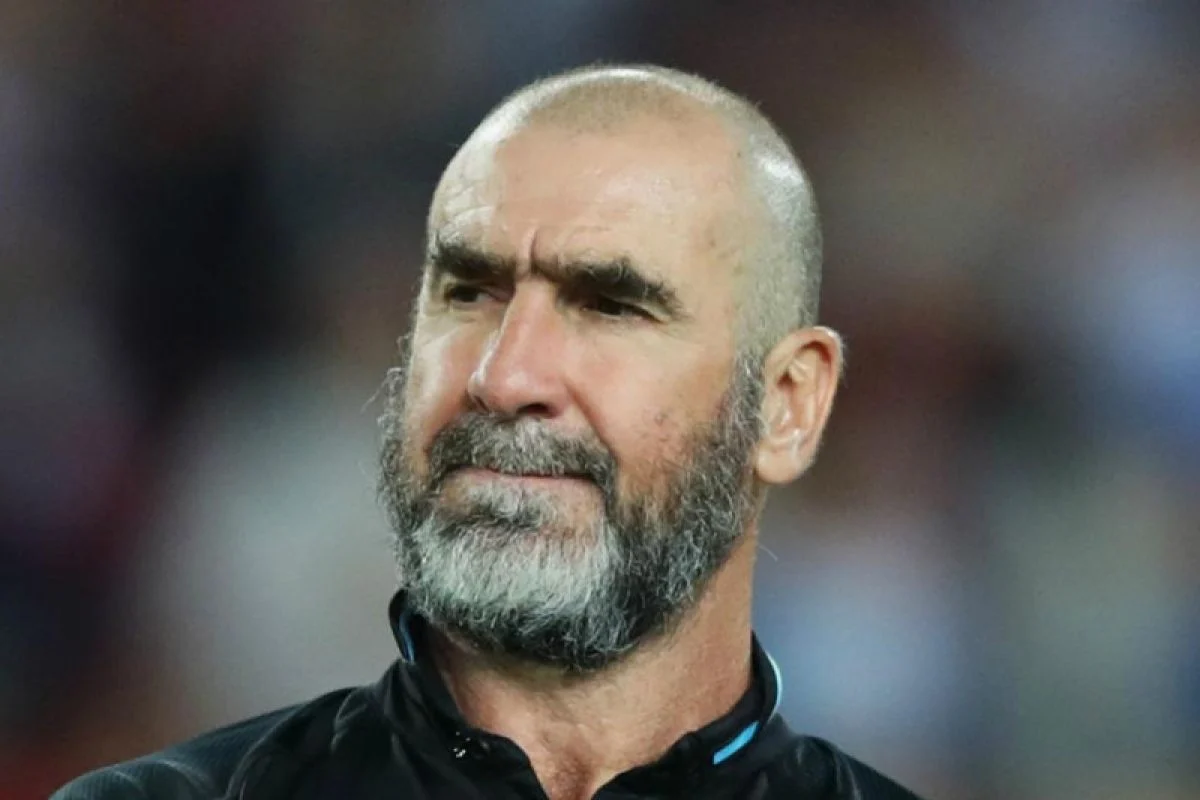
The intersection of professional sports and the global entertainment industry has long served as a captivating cultural phenomenon, demonstrating that athletic prowess and artistic brilliance often stem from similar reservoirs of discipline, ambition, and innate talent. While contemporary celebrity culture often categorizes individuals strictly by their current domains—whether that is the silver screen, the Billboard charts, or the football pitch—a surprising number of internationally recognized actors, musicians, and performers initially pursued entirely different trajectories. Long before capturing the imagination of millions through cinematic masterpieces, chart-topping albums, or sold-out stadium tours, several prominent Hollywood stars and global icons harbored serious aspirations of becoming professional footballers.
In some instances, these crossover figures did not merely dabble in recreational matches; they advanced through the rigorous ranks of elite football academies, secured professional contracts with premier European clubs, and, in rare cases, represented their respective national teams on the international stage. This striking dual-identity phenomenon offers a unique lens through which to examine the nonlinear nature of modern careers. By tracing the footsteps of individuals who successfully navigated the chasm between professional sports and entertainment, we uncover compelling narratives of resilience, reinvention, and the unpredictable pathways that define human achievement.
From Hard-Tackling Defender to Cinematic Tough Guy: The Vinnie Jones Phenomenon
Few individuals exemplify the bridge between aggressive professional sports and gritty Hollywood cinema quite like Vincent Peter Jones, universally known as Vinnie Jones. Born in Watford, England, in 1965, Jones carved out a fearsome reputation during the 1980s and 1990s as one of the most uncompromising midfielders in English football. Renowned for his uncompromising physical style, tenacity, and unrelenting competitive drive, Jones was the ultimate embodiment of the old-school English game—a player who commanded respect and instilled apprehension in equal measure among opposing players.
Jones’s professional journey began far from the glittering lights of the Premier League. He worked manual labor as a hod carrier while playing semi-professional football before breaking into the professional ranks with Wealdstone. His breakthrough arrived when he transferred to Wimbledon in 1986, a club affectionately dubbed the "Crazy Gang" due to their unconventional team culture and fiercely competitive, physical style of play. Jones quickly became the heartbeat of this legendary squad.
The zenith of Jones’s footballing career occurred on May 14, 1988, at Wembley Stadium. As a pivotal starting midfielder for Wimbledon, Jones faced a powerhouse Liverpool side widely expected to dominate the FA Cup final. Defying all odds, Wimbledon secured a historic 1-0 victory, with Jones playing an instrumental role in neutralizing Liverpool’s attacking threats and famously assisting Lawrie Sanchez’s winning header. Beyond his heroics with Wimbledon, Jones enjoyed successful stints with prominent clubs including Leeds United, Sheffield United, Chelsea, and Queens Park Rangers, while also earning nine international caps for the Wales national team by virtue of his Welsh grandparents.
When Jones retired from professional football in 1999, he seamlessly pivoted to an industry that paradoxically welcomed his intimidating persona. British filmmaker Guy Ritchie cast Jones as the debt-collecting enforcer Big Chris in the critically acclaimed 1998 crime comedy Lock, Stock and Two Smoking Barrels. The transition was remarkably smooth; the hardened demeanor and authoritative presence that once terrorized opposition midfielders translated directly into cinematic gold. Jones followed this breakout performance with roles in Snatch (2000), Swordfish (2001), Mean Machine (2001)—where he appropriately played a former England captain incarcerated in prison—and as the mutant Juggernaut in X-Men: The Last Stand (2006). Over two decades, Jones successfully shed the athlete-turned-actor novelty, establishing himself as a bankable character actor in Hollywood.
The Enigmatic King of Old Trafford and the Silver Screen: Eric Cantona
While Vinnie Jones utilized his defensive grit to transition into cinematic villainy and tough-guy roles, French icon Eric Cantona approached the entertainment industry with the same artistic flair, intellectual curiosity, and unapologetic self-expression that defined his footballing career. Widely regarded as a catalyst for Manchester United’s modern dynasty, Cantona’s influence on English football during the 1990s remains immeasurable.
Born in Marseille, France, in 1966, Cantona’s football career spanned clubs across France before his high-profile transfer to Leeds United in 1991, where he immediately secured the First Division title. However, it was his controversial and transformative move to Manchester United in November 1992 that permanently etched his name into football lore. Under the stewardship of Sir Alex Ferguson, Cantona injected a much-needed swagger, creativity, and winning mentality into a young United squad. With his signature upturned collar, majestic vision, and penchant for scoring breathtaking goals, Cantona led the Red Devils to four Premier League titles in five seasons, fundamentally altering the trajectory of the club.
Following his abrupt and shocking retirement from professional football in May 1997 at the age of 30, Cantona did not retreat into quiet retirement. Instead, he channeled his creative impulses into the arts. His cinematic debut arrived in the Academy Award-winning historical drama Elizabeth (1998), where he portrayed the French ambassador Paul de Foix alongside Cate Blanchett. This initial foray signaled that Cantona’s artistic ambitions extended far beyond commercial endorsements.
Over the subsequent decades, Cantona built a robust resume as an actor, producer, and cultural commentator, appearing in more than 25 films. One of his most celebrated cinematic achievements came in the 2009 Ken Loach film Looking for Eric, in which he played a fictionalized version of himself who serves as a philosophical mentor and imaginary friend to a depressed Manchester postman. By blending sports iconography with poignant social drama, Cantona proved that his post-football career was not an accidental afterthought, but a deliberate continuation of a life lived on his own terms.
From World Cup Glory to the Lee Strasberg Theatre: The Evolution of Frank Leboeuf
The narrative of elite athletes crossing over into entertainment often highlights players known for eccentric personalities, but methodical professionalism can yield equally compelling results. Frank Leboeuf stands as a prime example of a disciplined, cerebral defender who meticulously prepared for his post-athletic career while still competing at the highest levels of international football.
Born in Marseille, France, in 1968, Leboeuf built a stellar reputation as a ball-playing central defender characterized by positional intelligence, composure under pressure, and dead-ball proficiency. After establishing himself in French football with clubs such as Strasbourg, Leboeuf moved to English Premier League side Chelsea in 1996. During his five-year tenure at Stamford Bridge, he became a defensive stalwart, helping the Blues capture two FA Cups, a League Cup, and the UEFA Cup Winners’ Cup.
Concurrently, Leboeuf achieved the ultimate pinnacle of international success with the French national team. He was an integral member of Les Bleus squad that captured the FIFA World Cup on home soil in 1998—featuring prominently in the final against Brazil due to the suspension of Laurent Blanc—and subsequently added a UEFA European Championship medal to his trophy cabinet at Euro 2000.
Long before hanging up his boots, Leboeuf nurtured a deep-seated passion for the dramatic arts. Recognizing that elite athletic careers have a finite shelf life, he utilized his time in London and Los Angeles to lay the groundwork for his theatrical ambitions. Upon concluding his playing career, Leboeuf took a bold step: he relocated to Los Angeles specifically to immerse himself in formal acting training, enrolling at the prestigious Lee Strasberg Theatre & Film Institute.
This rigorous dedication paid dividends when casting directors looked past his footballing pedigree and evaluated him purely on his dramatic capabilities. Leboeuf’s most notable cinematic crossover occurred in the 2014 biographical romantic drama The Theory of Everything, where he was cast as a medical doctor treating the renowned theoretical physicist Stephen Hawking. By successfully transitioning from stopping world-class strikers to interpreting complex cinematic scripts, Leboeuf demonstrated that reinvention requires as much discipline off the pitch as tactical execution demands on it.
Chart-Topping Boyband Melodies Rooted in Leeds United Academies
The transformation from athlete to entertainer is not exclusively restricted to rugged defenders and tactical masterminds; it frequently extends to individuals who pursued music at the highest commercial levels. A striking illustration of this dynamic is found in the life of Nicky Byrne, best known globally as a key vocalist of the multi-platinum-selling Irish pop sensation Westlife.
Born in Dublin, Ireland, in 1978, Byrne displayed exceptional promise as a footballer during his youth, gravitating naturally toward the demanding and specialized position of goalkeeper. Blessed with sharp reflexes and natural leadership qualities, Byrne played for prominent youth clubs in Dublin, including Home Farm and St. Kevin’s Boys, before catching the discerning eye of talent scouts from English powerhouse Leeds United.
In 1995, at the age of 16, Byrne crossed the Irish Sea to sign with Leeds United as a youth team goalkeeper. He spent two formative years immersed in the intense, high-pressure environment of English professional football. His tenure in West Yorkshire culminated in a historic triumph when he served as a member of the Leeds United squad that captured the prestigious FA Youth Cup in 1997, defeating Crystal Palace in the final. For a teenage athlete from Dublin, standing on the threshold of a Premier League career represented the realization of a lifelong ambition.
However, the unforgiving nature of professional football dictates that few aspirants secure long-term senior contracts. When his tenure at Leeds concluded, Byrne returned to Ireland, faced with the necessity of charting a new course. That pivot redirected his boundless energy toward his secondary passion: vocal performance and contemporary pop music.
In 1998, Byrne auditioned for a newly forming vocal harmony group organized by Louis Walsh and managed by Simon Cowell. Selected alongside Shane Filan, Mark Feehily, Kian Egan, and Brian McFadden, Byrne became a foundational member of Westlife. The band rapidly evolved into a global phenomenon, selling over 55 million records worldwide, scoring 14 number-one singles on the UK Singles Chart, and producing international anthems such as My Love, Uptown Girl, and Flying Without Wings. For Byrne, the disappointment of a halted footballing career directly cleared the path toward unprecedented musical stardom, illustrating how closed doors in sports can occasionally open vast horizons in entertainment.
A Tragic Accident That Forged a Legendary Spanish Balladeer: Julio Iglesias
Perhaps the most profound and globally recognized example of an aborted athletic career sparking an iconic artistic legacy belongs to Spanish balladeer Julio Iglesias. Long before he became recognized as one of the best-selling Latin music artists in history—with global record sales exceeding 300 million units across 14 languages—Iglesias viewed his future strictly through the lens of sports.
Born in Madrid in 1943, Iglesias possessed a deep passion for association football. His athletic abilities were substantial enough to secure him a position as a professional goalkeeper for the youth academy of Real Madrid Castilla, the reserve team of the legendary Spanish club, starting in 1959. At the time, contemporaries and coaches viewed the young Iglesias as a player with genuine potential to secure a long-term professional career between the goalposts for Los Blancos.
The trajectory of his life, however, altered dramatically on the night of September 22, 1962. While driving with friends in Madrid, Iglesias suffered a catastrophic automobile accident. The severe trauma resulted in multiple spinal injuries that left the young goalkeeper temporarily paralyzed from the waist down. Doctors offered a grim prognosis, informing him that he would likely never walk again, effectively terminating his aspirations of a professional football career at the age of 19.
Confined to a hospital bed during an agonizing period of physical rehabilitation, Iglesias faced profound psychological distress. To aid in his recovery and help maintain fine motor skills, a sympathetic nurse gifted him an acoustic guitar. Initially utilized purely as a therapeutic tool to exercise his fingers, the instrument soon became a vessel for his emotional expression. Iglesias began writing poetry and composing melodies that reflected his isolation, recovery, and internal resilience.
Slowly, sensation returned to his lower extremities, enabling him to walk with the assistance of a cane. Crucially, the musical proficiency he developed during his darkest hours opened an entirely unanticipated vocational avenue. In 1968, Iglesias entered the prestigious Benidorm International Song Festival with a composition titled La vida sigue igual ("Life Goes On"). He not only won the festival but secured a recording contract with Discos Columbia, setting off a meteoric rise that would redefine romantic music on a global scale.
The Broader Implications of the Athlete-to-Entertainer Phenomenon
The collective experiences of Vinnie Jones, Eric Cantona, Frank Leboeuf, Nicky Byrne, and Julio Iglesias transcend mere biographical trivia, offering deep insights into the psychological architecture required for high-level public performance. Sports psychologists and entertainment industry analysts frequently note striking parallels between the demands placed on elite athletes and those required of successful actors and musicians. Both fields necessitate uncompromising self-discipline, the capacity to perform under intense public scrutiny, resilience in the face of failure, and the ability to work collaboratively within complex team structures—whether that team is a defensive backline, a cinematic crew, or a vocal harmony ensemble.
Furthermore, the economic and structural realities of modern professional sports underscore the immense value of transferable skills. Because the average professional football career is notoriously brief—often concluding before a player reaches their mid-thirties due to physical wear or injury—the transition into alternative industries has become a subject of strategic importance for sports governing bodies, agents, and players alike. While historical transitions like those of Jones or Cantona were largely driven by individual resourcefulness and cultural shifts, contemporary sports organizations increasingly provide education and media training to prepare athletes for life after sport.
Ultimately, these stories serve as a powerful reminder that human potential is rarely confined to a single predetermined category. Whether navigating the muddy pitches of the English lower divisions, the immaculate turf of Wembley Stadium, or the demanding environments of recording studios and film sets, these individuals demonstrate that ambition, adaptability, and raw talent possess the remarkable capacity to transcend borders, bridging two of the world’s most vibrant and influential cultural domains.