The Indonesian government is aggressively accelerating the development of critical water infrastructure across the eastern regions of the archipelago, including Papua, Maluku, and the Nusa Tenggara islands. This strategic initiative aims to achieve national water self-sufficiency, a pillar of the country’s long-term development agenda. As climate-induced drought persists throughout late 2026, the Ministry of Public Works (Kementerian PU) has intensified the deployment of water supply systems (SPAM), deep wells, pipeline networks, and advanced desalination technologies to mitigate the risk of water scarcity in geographically challenging landscapes ranging from mountainous terrains to isolated small islands.
The Climate Context and 2026 Drought Challenges
The urgency of this infrastructure drive is underscored by the prolonged drought conditions observed during the second half of 2026. According to the Meteorology, Climatology, and Geophysics Agency (BMKG), the period between October 13 and October 19, 2026, remained marked by significant dry spells across several eastern provinces. While localized rainfall has begun to provide minor relief in parts of Papua, the broader hydrological balance remains precarious.
The drought has exacerbated pre-existing vulnerabilities in regional water access. In Mimika and West Papua, for example, communities that traditionally relied on rainwater harvesting have faced severe shortages. By early October 2026, humanitarian aid organizations such as BAZNAS (National Zakat Agency) were forced to initiate emergency water distribution efforts in areas like SP 5, Mimika, as local storage capacities depleted. Similarly, in Kampung Weri, East Fakfak, natural springs and communal wells dried up, necessitating intervention from the Ministry of Transmigration’s Patriot Expedition teams, which worked alongside local law enforcement to distribute water and restore access to damaged supply points.
Strategic Infrastructure Deployment
Recognizing the diverse topographical challenges of Eastern Indonesia, the government has moved away from a "one-size-fits-all" approach. Instead, the current strategy integrates localized solutions tailored to specific environments:
- Mountainous Regions: Implementation of gravity-fed piping systems and reinforced spring capture structures.
- Coastal and Island Areas: Deployment of reverse osmosis and water treatment technologies to process brackish water into potable supplies.
- Lowland and Swamp Areas: Large-scale irrigation and deep-well drilling to tap into stable aquifers, minimizing the reliance on contaminated surface water.
The Ministry of Public Works has been at the forefront of this effort. As of July 2026, the ministry reported the successful construction of 44 kilometers of primary irrigation channels, a significant milestone toward the 135.4-kilometer target designated for the Merauke Food Production Center. While these irrigation projects are primarily aimed at supporting agriculture, the government has emphasized that domestic water access remains a non-negotiable priority within these integrated developments.
Papua Selatan: The KSPEAN Initiative
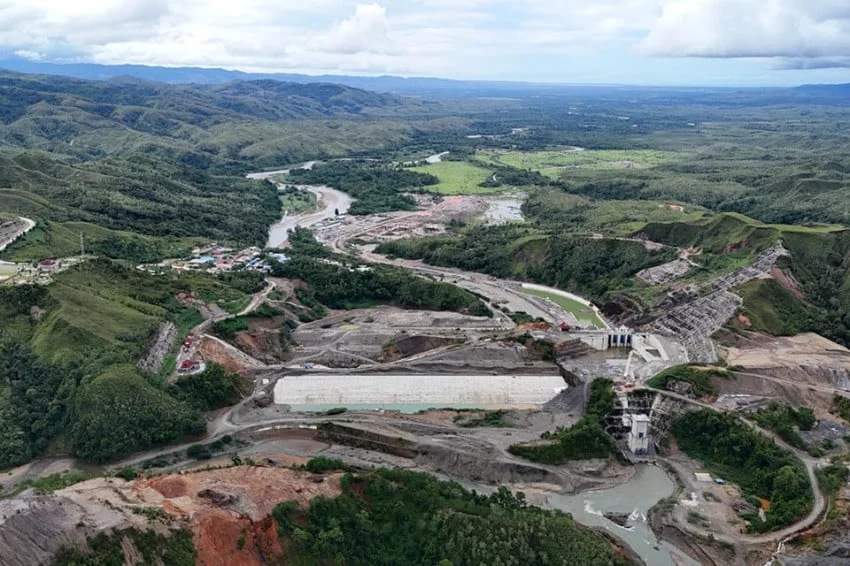
A central component of this national agenda is the development of the National Food, Energy, and Water Self-Sufficiency Area (KSPEAN) in Wanam, Merauke, South Papua. This project represents a shift toward holistic regional management. By co-locating energy production and water infrastructure, the government aims to create self-sustaining hubs that can support both industrial agricultural productivity and rising domestic demand.
South Papua Governor Apolo Safanpo highlighted the severity of the situation in early October 2026, noting that rivers and swamps not subject to tidal influence had seen a dramatic reduction in water levels. The provincial administration, in coordination with the central government, has accelerated the drilling of deep wells in various districts and villages to provide immediate relief. Governor Safanpo noted that the long-term solution lies in moving away from unsustainable groundwater extraction. "The transition toward utilizing surface water through advanced water treatment plants is a significant homework assignment for both provincial and regency governments," Safanpo stated, signaling a shift in policy toward more sustainable resource management.
Collaborative Efforts in Papua Tengah
In Central Papua, the Mimika Regency government has undertaken an ambitious project to expand the Water Supply System (SPAM) across 13 locations, spanning the districts of Kwamki Narama, Kuala Kencana, Wania, and Mimika Baru. This project serves as a model for public-private collaboration. To expedite the construction of the primary distribution networks and household connections, the regency received a grant of 1,724 high-quality pipe segments from PT Freeport Indonesia. This collaboration effectively lowered the barrier to entry for the project, allowing the government to focus its budget on labor and technical implementation.
Chronology of Recent Water Security Efforts (2025–2026)
- Early 2025: The government declares a national commitment to "Water Self-Sufficiency 2025," emphasizing the need for inter-ministerial collaboration to secure both food and water resources.
- July 2026: The Ministry of Public Works reports the completion of 44km of irrigation channels in the Merauke region, marking 32.5% progress toward the 135.4km goal.
- October 5, 2026: Governor Apolo Safanpo reports that drought conditions have severely impacted non-tidal water sources in South Papua, prompting a surge in emergency deep-well drilling.
- October 7, 2026: BAZNAS and regional agencies initiate emergency water distribution in Mimika to assist residents impacted by the drying of rainwater-dependent storage.
- Mid-October 2026: The Ministry of Public Works and local authorities in Fakfak prioritize the restoration of access to springs, acknowledging that climate volatility is now a permanent factor in regional planning.
Implications and Future Outlook
The push for water self-sufficiency in Eastern Indonesia carries profound socioeconomic implications. Reliable access to water is the primary catalyst for economic development, public health improvement, and social stability in remote regions. By reducing the time and financial burden associated with water collection—tasks that often disproportionately fall on women and children—the government expects to see improvements in school attendance and economic productivity.
Furthermore, the integration of water treatment technology and sustainable groundwater management reflects a maturation in Indonesia’s environmental policy. As climate change continues to disrupt traditional seasonal patterns, the ability to harvest and process water from diverse sources will become a critical indicator of regional resilience.
However, the success of these projects will depend on two factors: long-term maintenance and community ownership. Past infrastructure projects in Indonesia have occasionally suffered from a lack of post-construction maintenance, leading to the rapid degradation of pipe networks and pumps. To address this, the current Ministry of Public Works strategy includes the establishment of local water management boards (BUMDes or PDAM units) designed to oversee operational upkeep.
As Indonesia looks beyond the 2026 drought, the emphasis on infrastructure in Papua, Maluku, and Nusa Tenggara serves as a blueprint for the rest of the country. The transition from reactive disaster management—such as emergency trucking—to proactive engineering solutions marks a turning point in how the state manages its most vital resource. Through the continued coordination of central planning, regional implementation, and private sector support, the government aims to ensure that "swasembada air" is not merely a political slogan, but a reality for all citizens in the eastern frontier.