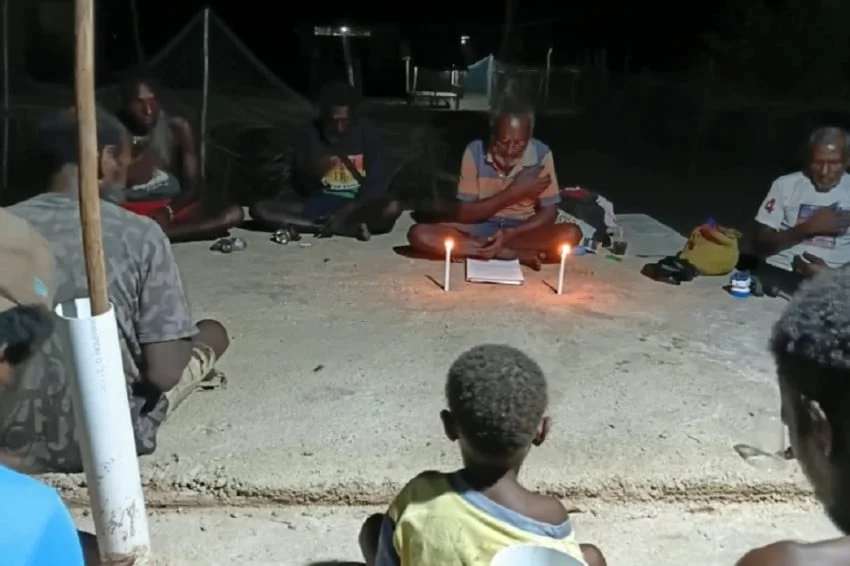
The remote yet strategically vital region of Wanam, located within the Ilwayab District of Merauke Regency in South Papua, became the focal point of a profound cultural and national reflection as the local indigenous leadership marked the annual observance of Hari Pahlawan (National Heroes Day). Amidst the shifting socioeconomic landscapes of Indonesia’s easternmost provinces, the Dewan Adat Woyu Kalai Anim Wanam (Woyu Kalai Anim Wanam Indigenous Council) stepped forward to anchor the community in its historical roots, urging residents to honor not only the conventional national heroes of the republic but also the ancestral figures who laid the foundational cultural architecture of the indigenous peoples.
Led by Yohanis Agabe Mahuze, Chairman of the Dewan Adat Woyu Kalai Anim Wanam, the commemoration transcended standard ceremonial practices. Through a deeply symbolic gathering characterized by shared prayers and a solemn candlelight vigil, the indigenous leadership emphasized that the preservation of customary laws (adat), traditional lands, and ancestral heritage constitutes a contemporary form of patriotism. This call to remembrance arrives at a critical juncture for South Papua, a region experiencing accelerated infrastructure development, administrative restructuring, and demographic shifts following the implementation of the new autonomous province policies.
Historical Context and the Significance of National Heroes Day in Indonesia
To understand the resonance of the Dewan Adat’s message, one must examine the broader historical framework of Hari Pahlawan. Commemorated annually on November 10, the national holiday marks the anniversary of the Battle of Surabaya in 1945. During this historic confrontation, Indonesian nationalists and militia forces engaged in fierce combat against British and Allied troops, rallying under the leadership of figures like Bung Tomo to defend the newly proclaimed independence of the Indonesian republic.
Over the decades, the commemoration has evolved from a military-centric remembrance into a broader national inventory of civic virtue, sacrifice, and nation-building. While the primary narrative historically centered on the physical revolution in Java and Sumatra, contemporary discourse—driven by regional leaders, historians, and cultural councils—seeks to integrate the localized struggles, endurance, and contributions of Indonesia’s myriad ethnic groups, particularly in regions like Papua, where traditional communities faced distinct colonial pressures and geographic isolation.
In South Papua, the conceptualization of a "hero" extends beyond the battlefield to include tribal elders, custodians of ecological knowledge, and protectors of communal territories who ensured the survival and cultural continuity of their clans across generations. By aligning the national observance of Hari Pahlawan with indigenous remembrance, the Dewan Adat Woyu Kalai Anim Wanam bridges the gap between state nationalism and customary identity.
Chronology of the Commemoration in Wanam
The commemoration events in Kampung Wanam unfolded through a carefully orchestrated sequence of traditional gatherings, communal reflections, and spiritual observations led by Chairman Yohanis Agabe Mahuze.
The proceedings commenced in the early morning hours with a traditional gathering of clan leaders, youth representatives, and village elders at a communal cultural site in Ilwayab District. The participants partook in a moment of silence, observing traditional customs while dedicating collective prayers to the founding fathers of the Indonesian state, fallen freedom fighters, and deceased indigenous leaders who guided the community through periods of transition.
Following the morning observance, a formal reflection session was convened under the leadership of Yohanis Agabe Mahuze. In his address to the community, Mahuze articulated the core message of the Dewan Adat, emphasizing that the sacrifices of past generations must serve as a moral compass for modern youth navigating the challenges of globalization and rapid regional development.
In the afternoon, the focus shifted toward inter-generational dialogue. Elders shared oral histories detailing the struggles of the Woyu Kalai Anim Wanam people, recounting how their ancestors preserved their livelihoods, maritime and terrestrial resource management systems, and social cohesion despite geographic isolation and changing political regimes. The day concluded with communal meals and traditional artistic expressions designed to reinforce clan bonds and community solidarity.
Statements and Official Perspectives from Indigenous Leadership
The central message delivered by Yohanis Agabe Mahuze during the solemn gathering captured the dual imperatives facing indigenous populations in modern Indonesia: national integration and cultural preservation.
"The Dewan Adat invites the entire community to pause, lower our heads, and offer prayers for the nation’s heroes, our ancestors, parents, and customary figures who have dedicated their lives and passed down their wisdom to the next generation," Mahuze stated during the proceedings.
Mahuze further underscored that the act of remembrance must not remain a passive historical exercise but should translate into active social cohesion. He highlighted that Indonesia’s foundational strength lies in its pluralism—encompassing hundreds of tribes, native languages, customary laws, and distinct traditions. According to the Dewan Adat, this diversity should function as an adhesive for national fraternity rather than a catalyst for division.
"This prayer is also an expression of gratitude for the profound diversity of Indonesia," Mahuze noted. "Our differences in ethnicity, language, and custom are not meant to divide us; rather, they are designed to be our greatest strength in building mutual brotherhood and safeguarding our shared homeland."
Broader Impact and Socioeconomic Implications for South Papua
The call to action issued by the Dewan Adat Woyu Kalai Anim Wanam carries significant socio-political and economic implications for the Merauke Regency and the broader South Papua province. As the region absorbs substantial national strategic investments—such as large-scale agricultural initiatives, infrastructural expansion, and the influx of non-indigenous populations—local indigenous communities face both unprecedented opportunities and acute vulnerabilities.
Sociological analysts and regional observers note that cultural councils like the Dewan Adat play a vital stabilizing role during periods of rapid transition. By anchoring community identity in traditional values of honesty, sincerity, mutual cooperation (gotong royong), and environmental stewardship, the leadership seeks to mitigate cultural erosion and social friction.
Furthermore, the integration of national commemorative days with indigenous values reinforces the sense of belonging among Papuan youth to the broader Indonesian state, fostering an inclusive nationalism that respects local autonomy and cultural heritage. The emphasis on ethical behavior—such as integrity, collective responsibility, and care for one’s neighbor—directly addresses contemporary concerns regarding youth delinquency, loss of traditional governance systems, and the commercialization of customary lands.
Fact-Based Analysis of Regional Challenges and Resilience
Merauke Regency, encompassing vast swaths of savannah, wetlands, and coastal ecosystems along the Arafura Sea, represents a unique geopolitical frontier. Kampung Wanam, situated within the Ilwayab coastal ecosystem, relies heavily on traditional fishing, sago harvesting, and small-scale agriculture. The preservation of these traditional livelihoods is inextricably linked to the ecological health of the region, which is increasingly impacted by climate variability and commercial land-use pressures.
In this context, the emphasis placed by the Dewan Adat on honoring ancestral wisdom is not merely symbolic; it represents an assertion of environmental and cultural sovereignty. Ancestral traditions in Wanam have historically governed sustainable resource use, preventing overexploitation and maintaining social equilibrium among clans. By framing these indigenous practices as vital contributions to national resilience, the Dewan Adat elevates local customary governance to a matter of national significance.
Moreover, the alignment of indigenous community goals with national holidays like Hari Pahlawan serves to strengthen communication channels between local populations and state institutions. It demonstrates that indigenous leadership in South Papua views national integration and cultural preservation as complementary rather than contradictory objectives.
Looking Forward: Sustaining the Spirit of the Heroes
As the commemorations concluded, the reverberations of the Dewan Adat’s message extended beyond Kampung Wanam, resonating across the Ilwayab District and the wider Merauke region. Community leaders and youth groups have pledged to incorporate the values emphasized by Yohanis Agabe Mahuze into daily community life, educational initiatives, and local governance structures.
The challenge moving forward lies in the practical implementation of these ideals. Ensuring that the spirit of heroism translates into tangible protections for customary land rights, youth empowerment programs, and equitable regional development will require sustained collaboration between indigenous councils, local government bodies, and civil society organizations.
Ultimately, the observance of Hari Pahlawan by the Dewan Adat Woyu Kalai Anim Wanam serves as a poignant reminder that the narrative of Indonesian independence and nation-building is deeply intertwined with the endurance, sacrifices, and cultural continuity of the nation’s indigenous peoples. By honoring both the national heroes of the republic and the ancestral guardians of the land, the communities of South Papua continue to forge a resilient path toward a shared and inclusive future.