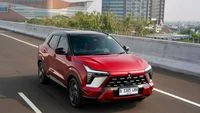
The landscape of Indonesia’s automotive industry continues to undergo a profound transformation, anchored by the accelerating adoption of Battery Electric Vehicles (BEVs). According to the latest wholesale data released by the Association of Indonesian Automotive Industries (Gaikindo), the domestic electric vehicle market demonstrated resilient growth throughout October 2026. Amid intensifying competition among global automotive giants, particularly from Chinese manufacturers who have firmly established their footprint in Southeast Asia’s largest economy, the BYD Atto 1 has successfully retained its position as the best-selling electric vehicle in the country.
The monthly distribution figures published by Gaikindo serve as a critical barometer for the health and trajectory of Indonesia’s green mobility sector. As the government aggressively pushes toward its long-term decarbonization targets and net-zero emissions goals, consumer uptake of electrified transport has transitioned from an urban novelty into a mainstream purchasing preference. The October 2026 data not only highlights dominant market leaders but also underscores the shifting dynamics of consumer choice, driven by competitive pricing, improved charging infrastructure, and an expanding portfolio of vehicle options tailored to Indonesian families and urban commuters.
BYD Atto 1 Maintains Leadership Despite Marginal Correction
Securing the top spot for yet another month, the BYD Atto 1 recorded a wholesale distribution figure of 4,329 units in October 2026. While this represents a minor contraction compared to its September performance—during which the model achieved 4,840 units distributed to dealerships—the Atto 1’s commanding lead demonstrates sustained high demand. Industry analysts attribute the vehicle’s enduring popularity to its balanced combination of advanced battery technology, modern aesthetic appeal, and competitive value proposition within the compact electric segment.
The slight month-on-month dip in Atto 1 deliveries is viewed by market observers as a routine operational fluctuation rather than a downward trend in consumer interest. Supply chain adjustments, regional logistics pacing, and inventory balancing across dealership networks frequently account for minor variances in monthly wholesale metrics. Nevertheless, the model remains the benchmark against which other entries in the volume-selling EV category are measured.
Intensifying Competition: Jaecoo J5 and Geely EX2 Secure Podium Finishes
While BYD maintains its stronghold at the summit, the competitive landscape immediately below the leader is evolving rapidly. The Jaecoo J5 has firmly entrenched itself as a formidable contender, capturing the second position in the national BEV sales rankings for October 2026. Jaecoo, a brand increasingly recognized for its rugged styling and versatile urban-off-road crossover appeal, registered 3,366 units in wholesale deliveries. This marks a notable upward trajectory, improving by 90 units compared to the 3,276 units recorded in September. The consistent growth of the Jaecoo J5 highlights a growing consumer appetite for electric crossovers that offer robust utility alongside zero-emission efficiency.
Claiming the third position on the podium is the Geely EX2, which registered a wholesale distribution of 1,178 units. Geely’s strategic reentry and aggressive market positioning in Indonesia’s EV segment have begun yielding tangible results, as the EX2 captures the attention of budget-conscious urban buyers seeking reliable daily transport with modern connectivity features.
Completing the upper tier of the October 2026 rankings, the Wuling Aira EV secured fourth place with 1,091 units distributed to dealerships. Wuling, a pioneer in kickstarting Indonesia’s mass-market electric vehicle revolution with its earlier micro-EV models, continues to command customer loyalty through localized manufacturing and accessible after-sales support. Rounding out the top five is the multi-passenger BYD M6 BEV, which recorded 768 units delivered, reaffirming the strong demand for electric multi-purpose vehicles (MPVs) that accommodate larger Indonesian families.
Comprehensive Breakdown of the Top 10 Best-Selling Electric Vehicles in October 2026
The broader top ten list reflects a diverse array of models catering to varying segments, ranging from compact city cars to spacious family haulers. According to Gaikindo’s official compilation, the complete ranking of the ten best-selling battery electric vehicles in Indonesia for October 2026 is as follows:
- BYD Atto 1: 4,329 units
- Jaecoo J5: 3,366 units
- Geely EX2: 1,178 units
- Wuling Aira: 1,091 units
- BYD M6: 768 units
- Wuling Binguo: 655 units
- MG S5: 635 units
- iCaur V23: 413 units
- BYD Atto 3: 400 units
- Chery Q: 361 units
Notable entries in the latter half of the top ten include the Wuling Binguo with 655 units, the MG S5 with 635 units, and the adventurous iCaur V23 posting 413 units. Meanwhile, the established BYD Atto 3 contributed 400 units to the manufacturer’s total monthly volume. Closing out the list at tenth place is the Chery Q, a relative newcomer that officially launched in August 2026, which successfully secured 361 units in its first full quarters of widespread commercial distribution.
National Sales Performance and Macroeconomic Growth Trajectory
On a macroeconomic level, the aggregate performance of the national electric vehicle market in October 2026 exhibited steady, positive momentum. Gaikindo data indicates that total wholesale figures—representing factory shipments to nationwide dealer networks—reached 16,791 units for the month. This represents a marginal yet encouraging increase compared to the 16,042 units recorded in September 2026, signaling that manufacturing output and dealer inventory replenishment are keeping pace with steady retail demand.
A broader examination of cumulative performance underscores the exponential expansion of Indonesia’s electric vehicle ecosystem over the past year. When analyzing the year-to-date figures, cumulative wholesale distribution of battery electric vehicles from January through October 2026 reached an impressive 133,983 units. When compared against the corresponding ten-month period in 2025—which recorded roughly 68,744 units—this translates to a staggering year-on-year growth rate of 94.9 percent.
This near-doubling of sales volume within a single year illustrates that electric vehicles are no longer confined to early adopters or niche urban demographics. Instead, they are rapidly capturing market share from traditional internal combustion engine (ICE) vehicles, propelled by favorable government policies, tax incentives, the ongoing expansion of public fast-charging corridors, and an increasing willingness among Indonesian consumers to embrace sustainable mobility solutions.
Strategic Implications and Industry Outlook
The robust figures for October 2026 carry significant implications for automotive manufacturers, policymakers, and infrastructure developers alike. For global brands, particularly Chinese automakers who currently dominate the Indonesian BEV landscape, localized manufacturing commitments and supply chain integration have proven to be decisive competitive advantages. By establishing local assembly operations and partnering with domestic distributors, brands like BYD, Wuling, and Chery have been able to optimize logistics, stabilize vehicle pricing, and comply more effectively with governmental localization requirements.
From a regulatory standpoint, the sustained surge in EV adoption validates the Indonesian government’s strategic framework aimed at positioning the nation as a regional hub for electric vehicle production and battery supply chains. With rich reserves of nickel—a critical component in lithium-ion battery chemistry—Indonesia has systematically attracted multi-billion-dollar investments spanning the entire EV manufacturing ecosystem, from upstream mining and refining to downstream battery cell production and vehicle assembly.
However, rapid market expansion also brings distinct challenges. Industry analysts emphasize that continued growth will heavily depend on the parallel acceleration of charging infrastructure development, particularly outside major metropolitan centers like Jakarta and Surabaya. Ensuring grid stability, standardizing charging protocols, and providing attractive financing schemes for prospective buyers remain crucial focal points for stakeholders in both the public and private sectors.
As the automotive industry looks toward the close of 2026, the milestone of surpassing 133,000 units in the first ten months sets the stage for a record-breaking annual finish. With manufacturers preparing new product rollouts and promotional campaigns for the upcoming year-end shopping season, the electric vehicle sector is well-positioned to maintain its aggressive growth trajectory, permanently reshaping the future of transportation in Indonesia.