The landscape of Indonesian national politics has entered a sensitive transition phase following the unexpected departure of Gibran Rakabuming Raka from the office of the Vice President. In response to this monumental constitutional development, political parties belonging to the ruling government coalition, officially known as the Red and White Cabinet coalition, have adopted a unified and disciplined stance. Rather than engaging in intense internal lobbying or pushing forward factional candidates to fill the high-profile vacancy, the coalition leadership has collectively decided to relinquish all nomination rights. The responsibility of selecting two distinct candidates for the vice-presidency to be formally submitted to the People’s Consultative Assembly (MPR) has been handed over entirely and unconditionally to President Prabowo Subianto.
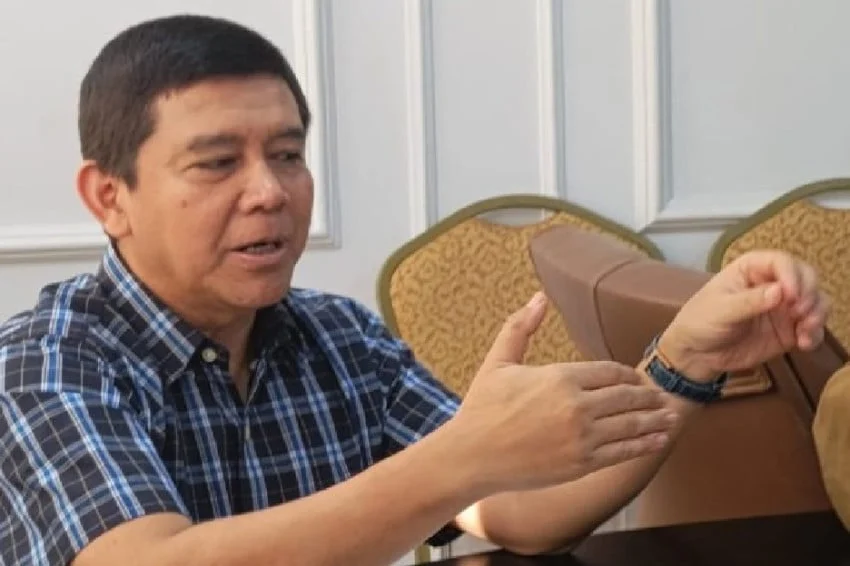
This synchronized maneuver by the coalition partners has sent strong political signals throughout Jakarta’s political corridors. Head of the Research and Development Agency (Balitbang) of the Golkar Party Central Executive Board (DPP), Yuddy Chrisnandi, offered a sharp political interpretation of this unified reluctance to nominate figures. In a written statement released in Jakarta, Yuddy analyzed the underlying message behind the coalition’s behavior, suggesting that this unconditional surrender of authority ultimately consolidates confidence in the existing legislative and party leadership alignment, particularly pointing toward Gerindra Party Daily Chairman Sufmi Dasco Ahmad as a central stabilizing figure within the legislative and executive coordination framework.
The Chronology of the Transition and Coalition Dynamics
The unfolding political narrative traces back to the official announcement regarding Gibran Rakabuming Raka’s resignation from the vice presidency, which immediately triggered specific constitutional mechanisms outlined under the 1945 Constitution of the Republic of Indonesia. Article 8 of the constitution dictates that if the presidency and vice presidency become vacant simultaneously, or if the vice presidency alone is vacated, the president shall nominate two candidates originating from political parties or coalitions of political parties whose candidates won the most votes in the previous general election. These two names must then be presented to the MPR for an open plenary session vote to elect the new Vice President.
Following the formal vacancy notification, leadership figures across the governing coalition initiated intense behind-the-scenes consultations to maintain executive stability. During these preliminary discussions, consensus began to form rapidly that a contested succession battle over the vice presidency could fracture the ruling coalition at a time when major economic and structural reforms are actively being implemented.
National Mandate Party (PAN) Chairman Zulkifli Hasan was among the first prominent coalition leaders to publicly address the looming transition. Zulkifli confirmed to the media that during high-level coalition meetings, an overwhelming majority of political party general chairmen explicitly agreed not to forward internal party cadres or personal ambitions for the vice-presidential slot. By removing internal competition, the coalition aimed to insulate President Prabowo from external pressure, granting the executive head absolute autonomy in choosing a governing partner who can ensure seamless continuity of state policies.
Golkar’s Strategic Stance and Internal Assessment
Within the broader coalition framework, the Golkar Party—as one of the foundational pillars of the government—has maintained a posture of absolute loyalty to the executive branch. Yuddy Chrisnandi emphasized that the Golkar Party stands fully prepared to endorse and campaign for whichever candidate is ultimately selected and proposed by President Prabowo.
Offering a candid internal assessment of Golkar’s standing relative to the executive office, Yuddy noted that unlike the Gerindra Party, which shares deep historical, ideological, and interpersonal ties with President Prabowo, the Golkar Party does not possess figures with the same degree of long-standing personal intimacy with the Head of State. This realization has led Golkar leadership to adopt a pragmatic and supportive approach rather than an aggressive pursuit of the second-highest office in the land. By avoiding friction, Golkar positions itself as a reliable and stable legislative anchor.
Furthermore, Yuddy elaborated on the conceptual framework that should ideally guide the selection of the ideal vice-presidential candidate. Drawing from governance experience and the practical demands of the Prabowo administration, Yuddy outlined several core competencies required for the next Vice President. First, the candidate must be a figure who has earned the sustained personal and professional trust of the President over a considerable period. Second, the individual must exhibit absolute ideological and programmatic alignment with the President’s strategic vision, particularly regarding national self-sufficiency, food security, and downstream industrial policies. Third, the prospective vice president must possess high-level diplomatic and negotiation skills necessary to manage relations with a multifaceted parliament and diverse socio-political forces. Fourth, the candidate must demonstrate a profound understanding of macroeconomic challenges, state budget management, and fiscal policy implementation. Finally, the figure must possess the communicative capacity to bridge the gap between elite policymaking and public expectations, effectively absorbing and translating grassroots aspirations into actionable government programs.
Broader Economic and Political Implications
The decision of the ruling coalition to grant President Prabowo a blank check regarding the vice-presidential nomination carries profound implications for Indonesia’s political stability and economic trajectory. Financial markets and international investors closely monitor transitions of power within emerging market economies, particularly within Southeast Asia’s largest democracy. A protracted succession struggle could have introduced market volatility, stalled legislative agendas, and raised questions regarding policy continuity.
By projecting a unified front and projecting complete deference to the presidency, the coalition has successfully mitigated near-term political risk. Analysts note that this high degree of executive latitude strengthens President Prabowo’s hand, allowing him to prioritize technical competence and administrative synergy over raw partisan horse-trading. Whether the final nominees lean toward technocratic profiles or seasoned political operators, the ultimate choice will set the tone for the remainder of the presidential term.
As the formal mechanisms move toward the MPR plenary sessions in the coming weeks, attention now pivots entirely to Merdeka Palace. The nation awaits the official announcement from President Prabowo regarding the two names that will step forward to shape the future governance of the Republic of Indonesia.