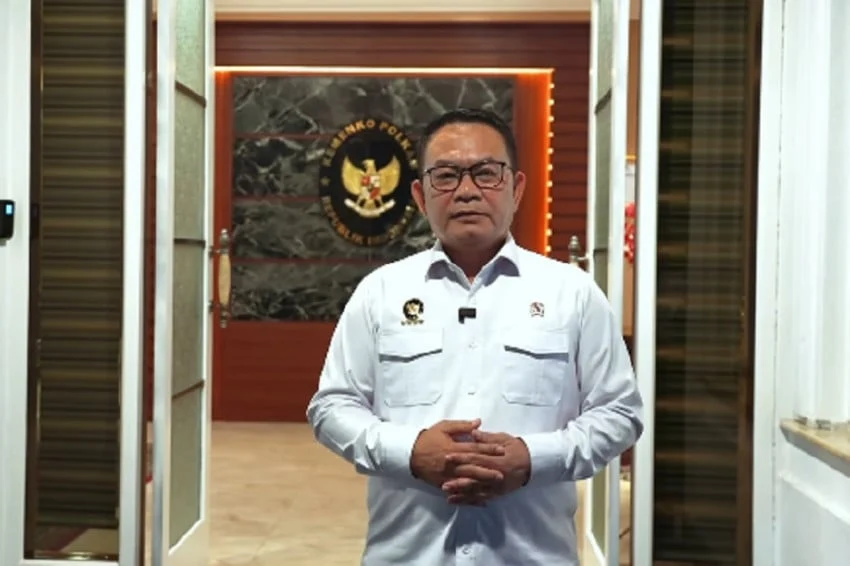
JAKARTA — The Indonesian government has officially responded to the wave of demonstrations that took place across Jakarta and several other major regions on Wednesday, October 28, 2026. Coordinating Minister for Political and Security Affairs (Menko Polkam) General TNI (Ret.) Dudung Abdurachman stated that the administration deeply respects and values all public aspirations, criticisms, and feedback voiced by citizens. The demonstrations, which coincided with the historic commemoration of Indonesia’s Youth Pledge (Sumpah Pemuda), drew diverse groups of citizens, students, and civil society organizations into the streets to voice various socioeconomic and political concerns.
Speaking through an official video broadcast released on the Ministry’s verified Instagram account, @polkamri, General Dudung emphasized that the right to peaceful assembly and free speech is foundational to the nation’s democratic framework. However, the government’s response also underscored the delicate balance between exercising constitutional freedoms and maintaining public order, setting off a broader national discourse regarding the state of civic space, student activism, and governmental accountability in contemporary Indonesia.
Constitutional Rights and the Boundaries of Free Expression
Elaborating on the government’s stance, Minister Dudung reiterated that freedom of expression is explicitly guaranteed under the Indonesian Constitution. He stressed that dissenting opinions and constructive criticism are not viewed as threats by the state, but rather as vital components necessary for maintaining a healthy, participatory democracy.
"I want to reaffirm that expressing opinions is a constitutional right of every citizen. The government respects the aspirations, criticisms, and input of the public as an essential part of our democratic life," Dudung stated in his official address.
Despite this strong affirmation of democratic rights, the Coordinating Minister drew attention to the legal boundaries governing public demonstrations. Referencing Law Number 9 of 1998 concerning Freedom of Expression in Public Spaces, Dudung reminded all elements of society that the realization of civil liberties must always be accompanied by a profound sense of civic responsibility. The legislation mandates that public demonstrations must be conducted with due regard for statutory compliance, national security, public order, and the rights and freedoms of others.
"Therefore, I urge all participants in the action to deliver their aspirations peacefully, orderly, and responsibly," Dudung added. He further encouraged citizens to remain steadfast in their pursuit of social justice and accountability while maintaining civil discourse. "Convey criticism firmly, yet politely. Fight for the interests of the community without harming other members of the public."
Chronology of Events and the Build-Up to the October 28 Protests
The demonstrations on Wednesday, October 28, 2026, did not materialize overnight; rather, they were the culmination of weeks of rising socioeconomic tensions and growing dissatisfaction with specific policy directions. The choice of date carried profound symbolic weight, as October 28 marks the anniversary of the 1928 Youth Pledge, a historic milestone wherein young Indonesians vowed unity under one nation, one motherland, and one language.
In the days leading up to the demonstrations, various student executive boards (BEM), labor unions, and grassroots coalitions circulated digital manifestos outlining their grievances. Key issues cited in these calls to action included economic pressures, inflation, cost-of-living increases, concerns over labor market regulations, and perceived shortcomings in governmental transparency.
By the morning of October 28, large contingents of university students began converging on strategic locations across the capital city, most notably around the Arjuna Wijaya Horse Statue area, the Monumen Nasional (Monas) vicinity, and the bustling operational hub of Bundaran Hotel Indonesia (HI). Eyewitness reports and media coverage highlighted the presence of hundreds of students who marched in structured formations, carrying banners, placards, and shouting slogans. Notably, various student factions were observed displaying distinct symbolic gestures, such as the widely reported "three-finger salute," drawing historical parallels to resistance movements and political dissent.
Concurrently, regional cities—including Bandung, Yogyakarta, Surabaya, and Makassar—witnessed parallel mobilizations. While the vast majority of the protesters engaged in peaceful speech-making and theatrical presentations, law enforcement agencies deployed security personnel to manage traffic flows and secure vital public infrastructure. The coordination between local authorities and field coordinators largely succeeded in preventing major disruptions, though temporary traffic diversions caused congestion in central business districts throughout the afternoon.
Historical Context of Student Activism in Indonesia
To understand the weight of the October 28, 2026 protests, one must examine the deep-rooted tradition of student-led mobilization in Indonesian political history. From the revolutionary movements of the early 20th century to the pivotal uprisings of 1966 and 1998, students and youth organizations have consistently acted as moral barometers and catalysts for political reform in the archipelago.
In the post-Reformasi era, the relationship between the state and student movements has evolved. While contemporary protests rarely target the fundamental regime structure as they did during the fall of the New Order, they frequently serve as crucial pressure points for specific policy adjustments. Analysts note that administrations are acutely aware of the symbolic power carried by youth-led movements, particularly when demonstrations occur on national holidays historically associated with youth empowerment, such as Sumpah Pemuda.
The decision by the Ministry of Political and Security Affairs to issue a prompt, conciliatory response reflects a strategic effort to de-escalate potential friction. By acknowledging the legitimacy of public grievances early in the cycle, the government seeks to distinguish itself from authoritarian models of governance, projecting an image of an administration that listens to its citizenry.
Broader Implications and Socio-Political Analysis
Political analysts and civil society watchdogs have offered mixed interpretations of the events of October 28 and the government’s measured reaction. On one hand, human rights advocates and academic observers have praised the government’s explicit acknowledgment of constitutional rights, noting that rhetorical support for free speech is essential to preventing escalation and maintaining social cohesion.
However, experts also emphasize that public rhetoric must be matched by substantive policy engagement. The underlying drivers of the October 2026 demonstrations—ranging from economic insecurity to structural policy debates—require continuous dialogue between state institutions and civil society representatives. When citizens take to the streets, it often signals a perceived communication gap between the populace and policymakers.
Furthermore, the implementation of Law Number 9 of 1998 remains a subject of ongoing debate among legal scholars. While the law protects free expression, critics frequently argue that administrative hurdles, permit requirements, and varying interpretations by local law enforcement agencies can sometimes create barriers for marginalized groups attempting to exercise their rights. Ensuring that security forces maintain a proportional, human-rights-centric approach during large-scale mobilizations remains a key benchmark for Indonesia’s maturing democracy.
Economic and Administrative Impact
Beyond the political sphere, large-scale demonstrations in metropolitan hubs inevitably carry economic ramifications. Central Jakarta businesses, public transportation networks, and commercial establishments frequently experience temporary precautionary closures or logistical adjustments during major protest days. However, business associations reported that the impact of the October 28 demonstrations remained localized and short-lived, largely due to the peaceful nature of the gatherings and the effective communication between protest organizers and security details.
The financial markets and investor sentiment also showed resilience, absorbing the news of the nationwide rallies without significant volatility. Economists point out that international investors increasingly view peaceful protests as a standard feature of a functioning, open democratic society, provided that state responses remain measured and institutional stability is maintained.
Looking Ahead: The Path of Constructive Dialogue
As the dust settles from the demonstrations, the focus of political observers shifts toward how the government intends to address the specific substantive demands raised by the student coalitions and civil society groups. Minister Dudung’s call for "firm yet polite" criticism sets a collaborative tone, but the true test will lie in the willingness of legislative and executive bodies to establish formal channels for grievance redressal.
Civil society organizations have called for the establishment of structured forums where student representatives and labor leaders can present detailed policy papers directly to relevant ministries. Such institutionalized mechanisms could help bridge the gap between street-level protests and parliamentary policymaking, fostering a more predictable and productive environment for national discourse.
Ultimately, the events of October 28, 2026, serve as a potent reminder of the dynamic interplay between state authority and civic engagement in Indonesia. As the nation continues to navigate complex economic and social transitions, the ability of both the government and the citizenry to engage in respectful, lawful, and constructive dialogue will remain the ultimate guarantor of democratic resilience and national stability.