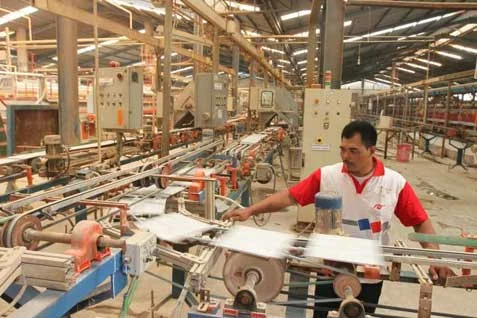
Jakarta – The Indonesian government has reinforced its commitment to safeguarding the national ceramic manufacturing sector by addressing two critical operational pillars: securing affordable energy supplies and protecting domestic producers from predatory foreign trade practices. These strategic measures aim to preserve production continuity, stimulate industrial expansion, and strengthen the country’s position within the fiercely competitive global manufacturing landscape.
The initiative comes at a crucial juncture for Indonesia’s industrial policy, as domestic ceramic producers navigate complex supply chain dynamics, fluctuating energy costs, and intense competition from heavily subsidized foreign imports. By tackling structural bottlenecks in energy access and enforcing robust trade defenses, the Ministry of Industry seeks to establish a resilient ecosystem capable of sustaining long-term economic growth and job creation.
Current State and Global Standing of Indonesia’s Ceramic Sector
Indonesia’s ceramic industry has demonstrated remarkable resilience and growth, evolving into a major player on the international stage. According to recent data from the Indonesian Ceramic Industry Association (ASAKI), the nation has successfully ascended from the seventh to the fifth-largest ceramic producer globally, trailing only industrial powerhouses such as China, India, Brazil, and Vietnam.
Almost all varieties of ceramic products are now successfully manufactured domestically, reflecting the high capability and technological advancement of local factories. Total installed production capacity for the sector reached 686 million square meters by 2026. Backed by proactive government policies, capacity utilization is projected to climb from 73 percent in 2025 to 75 percent in 2026, equating to an estimated output of 510 million square meters.
Despite these impressive milestones, industry stakeholders and government officials acknowledge that sustained growth depends heavily on mitigating external pressures. Chief among these concerns are the volatility of natural gas prices, reliability of supply, and the influx of low-priced foreign goods that threaten fair market competition.
Energy Security: The Critical Role of Competitive Gas Pricing
Energy costs constitute a significant portion of operational expenditures for ceramic manufacturing, making natural gas availability and pricing a paramount concern. Minister of Industry Muhammad Sarmuji emphasized that predictability in gas supply is essential for manufacturers to accurately forecast and optimize their production processes.
"Our ceramic industry is developing exceptionally well, and nearly all types of ceramics can now be produced domestically. However, unresolved challenges persist, notably concerning the availability of gas at competitive prices and the safeguarding of domestic products from import surges," Minister Sarmuji stated in an official release.
From the perspective of the Ministry of Industry, ensuring gas availability allows manufacturers to plan operations effectively. Furthermore, the pricing structure must remain competitive to enable domestic producers to rival foreign counterparts. "We will continuously advocate for certainty in gas supply so that industries can project and plan their production processes. Secondly, the pricing must undoubtedly remain competitive to ensure the sector continues to operate and expand," Sarmuji added.
However, challenges regarding energy affordability and reliability remain pressing. ASAKI Chairman Edy Suyanto detailed that while the government has allocated approximately 73 percent of the industry’s total gas requirements, practical implementation has faced hurdles.
Although the agreed natural gas allocation and the inclusion of regasified Liquified Natural Gas (LNG) should theoretically yield an average price of $8 to $8.5 per MMBTU for recipients under the Dedicated Natural Gas Price (HGBT) policy, supply disruptions between September and October drove actual average costs up to $11 per MMBTU. ASAKI has urged the government to strengthen oversight on gas allocation enforcement to ensure consistent delivery, warning that sustained pricing anomalies could undermine sector competitiveness.
Trade Defense Mechanisms and Anti-Dumping Measures
Beyond energy dynamics, the Indonesian government is ramping up efforts to counter unfair trade practices, particularly through strict trade defense instruments. Minister Sarmuji highlighted that low-priced ceramic imports, notably from China, have already been subjected to anti-dumping import duties. Meanwhile, potential dumping practices originating from other nations, including India, are slated for deeper investigation.
"We will propose to the Ministry of Trade and the Ministry of Finance to re-examine countries with the potential to engage in dumping, specifically regarding ceramic products. If proven, appropriate measures must be implemented in accordance with regulations so that domestic industries can compete fairly," Sarmuji asserted.
In tandem with anti-dumping investigations, the Ministry of Industry is tightening entry barriers for foreign ceramic goods by strictly enforcing the Indonesian National Standard (SNI) and other technical compliance policies. These measures ensure that circulating products meet stringent quality thresholds while protecting the operational viability of local manufacturers.
Sarmuji reiterated the government’s unwavering stance in protecting state officials tasked with supervision and licensing from external pressure or intimidation by vested interests favoring imports. Nevertheless, a targeted and selective approach to policy relaxation remains available for specific ceramic categories that cannot yet be manufactured domestically.
Tangmatic Success Stories and Private Sector Expansion
The combination of strict import controls and supportive energy policies has yielded tangible economic benefits, inspiring confidence among business owners and attracting fresh capital into the market. A prominent success story highlighted by ASAKI involves foreign and domestic traders who previously operated exclusively as importers, successfully transitioning into domestic manufacturers by establishing local production facilities.
A prime example is a major manufacturing facility established in Subang, West Java, with further expansion plans underway. The enterprise intends to build an equivalent production plant in East Java, which will elevate the business group’s total production capacity to approximately 140,000 square meters per day.
Driven by this favorable business climate, the broader domestic ceramic industry is expanding its production capacities through new investments. ASAKI noted that a second wave of industrial expansion is scheduled for the 2026–2028 period, featuring an additional production capacity of 110 million square meters. This growth trajectory is projected to attract approximately Rp 12 trillion in new investments and create 7,000 to 7,500 new jobs.
Industry Response and Collaborative Outlook
ASAKI Chairman Edy Suyanto expressed strong appreciation for the government’s resolute dedication to safeguarding the sector. He noted that interventions such as anti-dumping duties, import tightening, and advocacy for industrial gas provisions have played an instrumental role in driving positive performance metrics across the board.
"The rise in our global ranking is inseparable from government support, especially through the enforcement of anti-dumping import duties and import tightening. These policies have proven highly effective in protecting the national ceramic industry and boosting production utilization rates, at a time when several other nations are experiencing declining utilization trends," Suyanto explained.
Industry leaders remain optimistic that continued dialogue between manufacturers and policymakers will resolve lingering energy supply inconsistencies. By maintaining a united front against predatory pricing and addressing structural cost disadvantages, Indonesia is well-positioned to cement its status as a premier global manufacturing hub for ceramic products.
Implications and Future Outlook
The concerted efforts by the Indonesian government and industry associations to protect and nurture the ceramic sector carry profound macroeconomic implications. By strengthening domestic manufacturing capabilities, Indonesia reduces its reliance on foreign supply chains, bolsters national economic resilience, and retains higher economic value within its borders.
The creation of thousands of high-skilled manufacturing jobs, paired with trillions of rupiah in fresh capital investments, underscores the transformative power of strategic industrial policies. Moving forward, the sustained success of Indonesia’s ceramic sector will hinge on the government’s ability to balance rigorous trade enforcement with flexible, market-responsive energy policies. Ensuring predictable gas pricing and uncompromised supply reliability will ultimately determine whether Indonesian manufacturers can successfully convert their top-five global standing into long-term, sustainable market dominance.